Millions of paintings hang in museums around the world. Only a few dozen get to be famous on the internet, and an even smaller club gets memed so often they basically work as emoji with frames.
What do those paintings have in common? It isn't always beauty or fame. It's usually a face, a gesture or a moment that you can read in half a second on a phone screen. Here are the most memed paintings in art history, and why each one works.
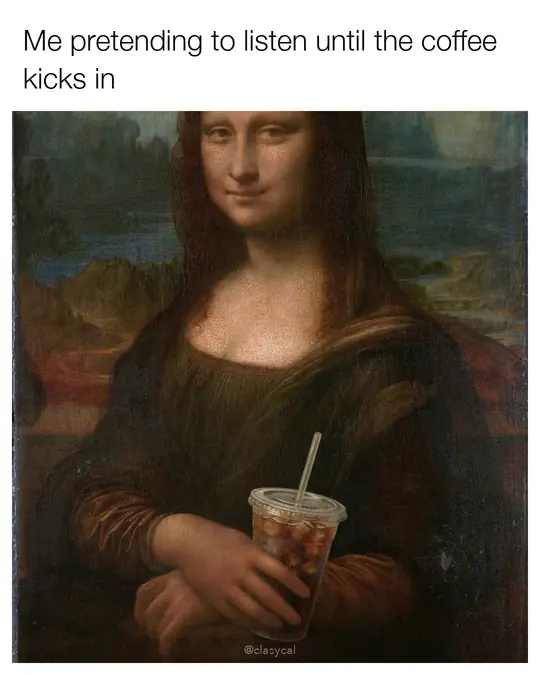
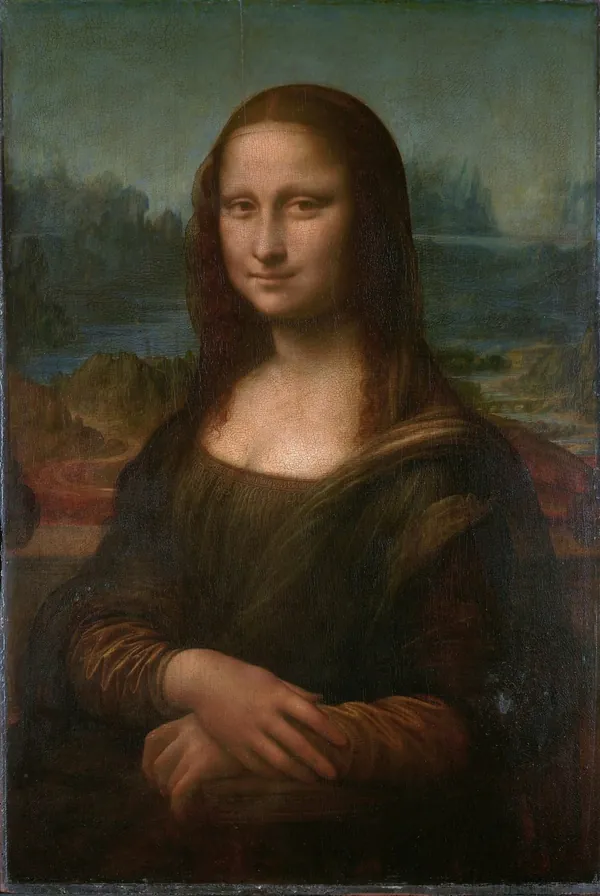
1. Mona Lisa: the original "I've seen your messages"
Leonardo da Vinci's portrait of Lisa Gherardini, begun around 1503, is probably the most reproduced painting on Earth. Its internet career started long before the internet. In 1911 an Italian handyman named Vincenzo Peruggia stole it from the Louvre, and the two-year search turned it into a global celebrity. In 1919 Marcel Duchamp drew a moustache and goatee on a postcard of it and called the result L.H.O.O.Q., which is about as close to an early meme as the art world gets.
Why it works: that half-smile can mean anything. Smug, polite, unimpressed, quietly plotting. A face that ambiguous fits almost any caption.
2. The Scream: dread, but make it relatable
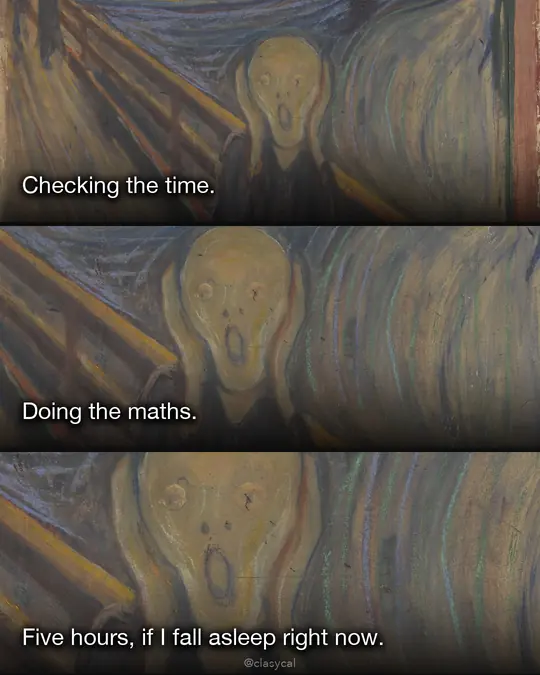
Edvard Munch made several versions of The Scream: two paintings, two pastels and a lithograph, starting in 1893. He described the moment that inspired it as sensing "an infinite scream passing through nature." In 2012 one of the pastel versions sold at auction for about $120 million.
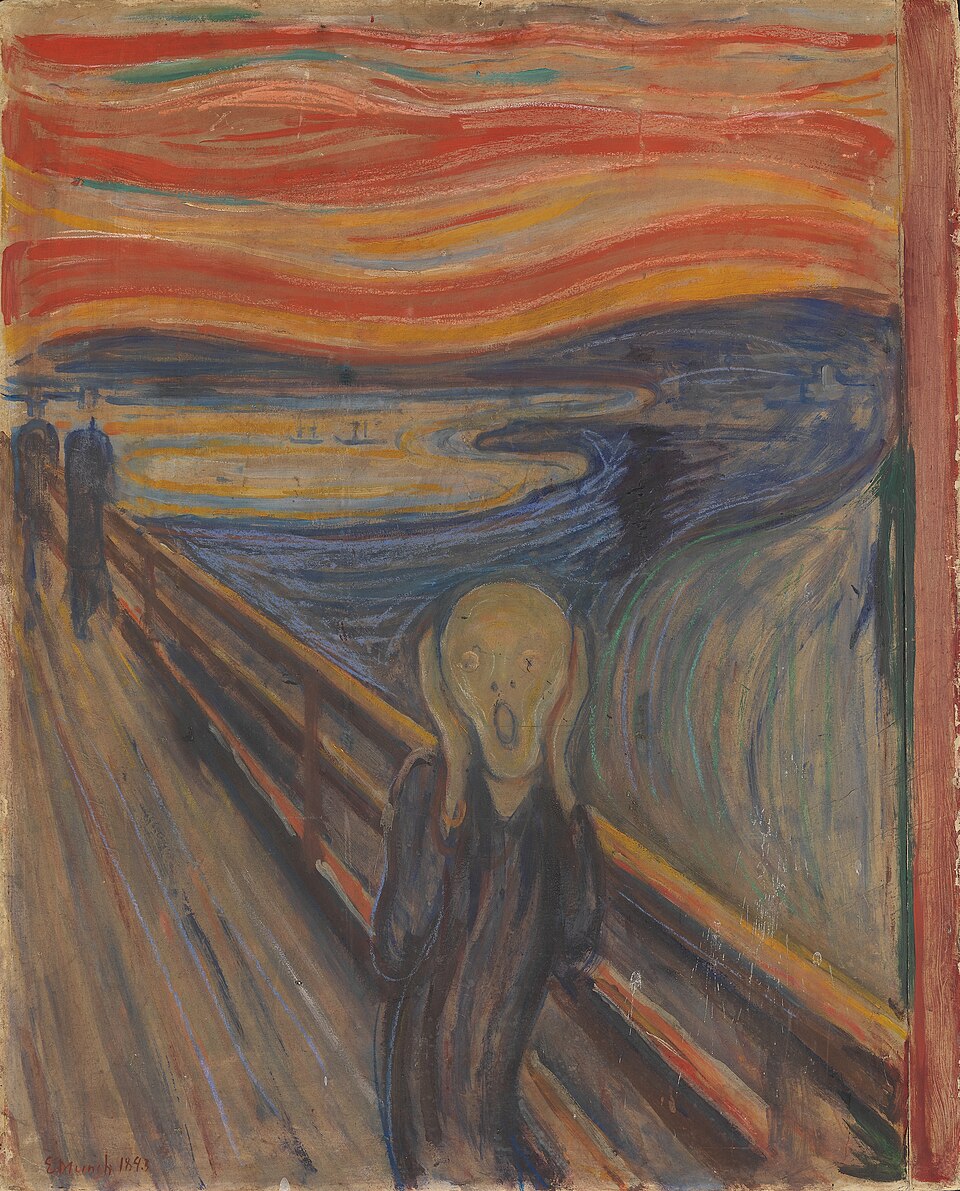
Why it works: it's pure emotion with almost no details to get in the way. The figure barely has a face, which means it can be anyone. Usually it's you, at 7:58, realizing the meeting is at 8.
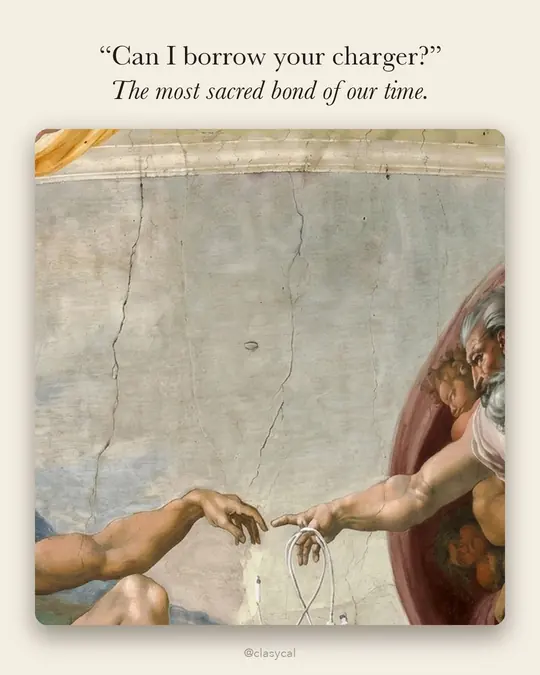
3. The Creation of Adam: two fingers, infinite formats
Michelangelo painted the Sistine Chapel ceiling between 1508 and 1512, and the near-touch between God's finger and Adam's is its most famous detail. That small gap has been cropped, parodied and repurposed for everything from tech ads to people reaching for the last slice of pizza.
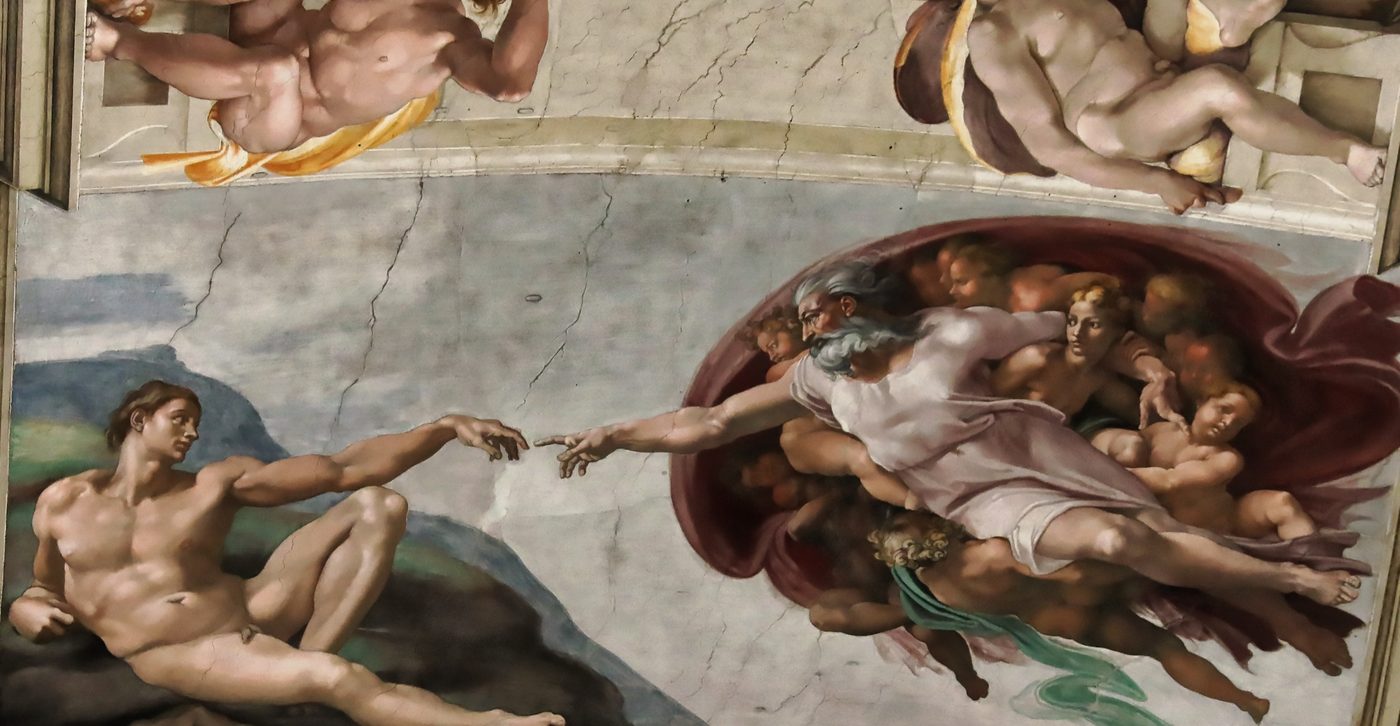
Why it works: it's a composition, not just a face. Two hands, one gap. Replace either hand with anything and the joke still lands.
4. Joseph Ducreux's Self-Portrait as a Mocker: the godfather
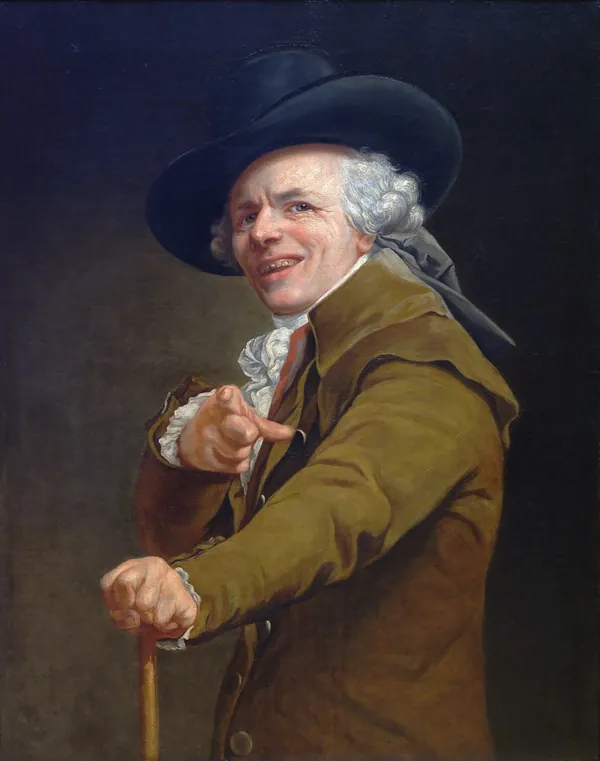
A French court painter grinning and pointing at the viewer, around 1793. In 2009 he became the face of "Archaic Rap," where rap lyrics were rewritten in stiff 18th-century English, starting with "Disregard females, acquire currency." We gave him his own article, because he earned it.
Why it works: direct eye contact, an open grin (rare in his era) and a pointing finger. He seems to be talking directly to you.
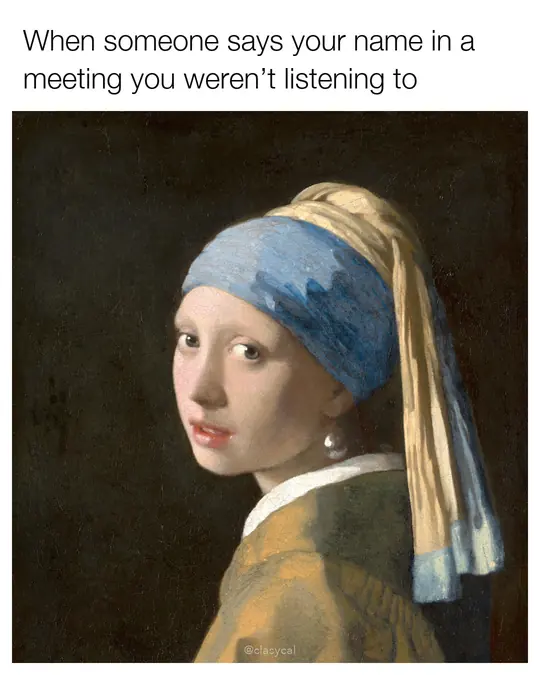
5. Girl with a Pearl Earring: the over-the-shoulder look
Johannes Vermeer painted her around 1665, and it's now the star of the Mauritshuis in The Hague. Technically it isn't even a portrait. It's a tronie, a Dutch study of a face, expression or costume rather than a specific person. Nobody knows who modeled for it.
Why it works: the turned head and parted lips look like someone who just heard their name mentioned across the room. Perfect for "when someone says they don't like brunch."
6. The Swing: the original "out of office"
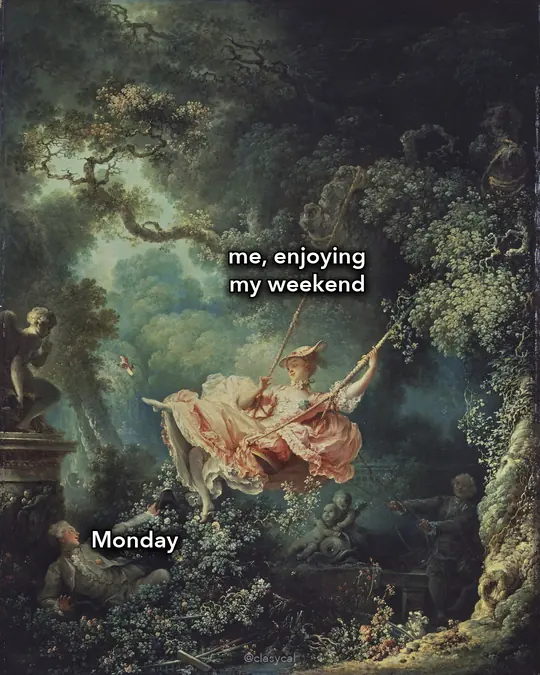
Jean-Honoré Fragonard's The Swing (around 1767, the Wallace Collection, London) shows a young woman in a froth of pink silk flying through the air, kicking a slipper off toward a man hiding in the bushes. It's flirtatious, frivolous and gloriously over the top.
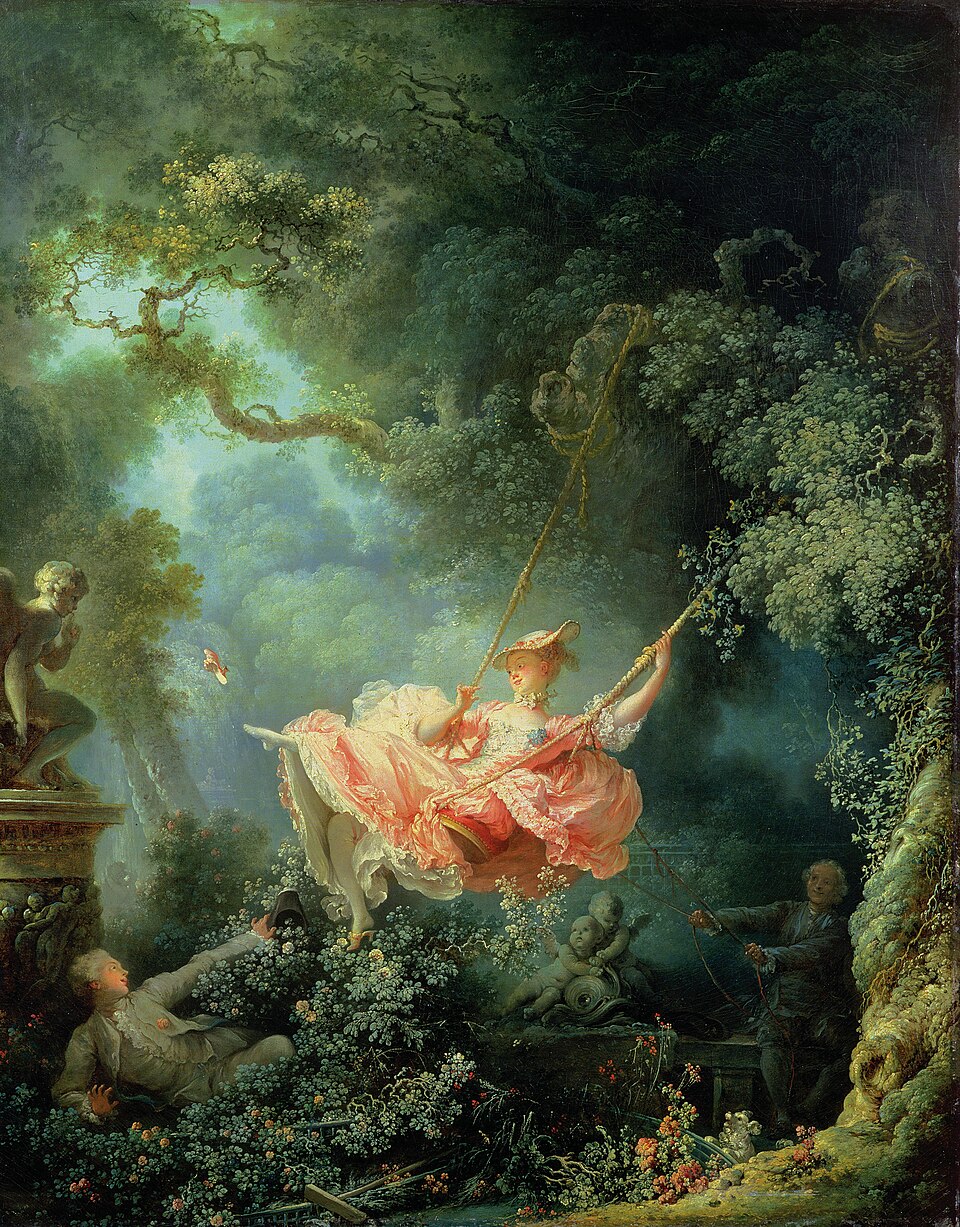
Why it works: pure, carefree motion. It's the face of Friday afternoon, an approved vacation request, or simply leaving the group project to someone else.
7. Saturn Devouring His Son: when the vibe is chaos
Francisco Goya painted it directly onto a wall of his house outside Madrid, around 1819–1823, as one of his private "Black Paintings." He never meant it for the public. It was later transferred to canvas and now hangs in the Prado.
Why it works: the bulging, panicked eyes. It's the go-to image for extreme behavior, like eating an entire family-size bag of chips "just to try one."
Honorable mentions
- Rembrandt's wide-eyed self-portraits. He etched himself pulling faces in the 1630s, essentially producing reaction images for the future.
- Medieval babies. Grown-up faces on tiny bodies. Here's why they look like that.
- Bosch's hell panel. Including a man with sheet music on his behind. Yes, really.
The formula behind a memeable painting
Look at the list again and a pattern appears:
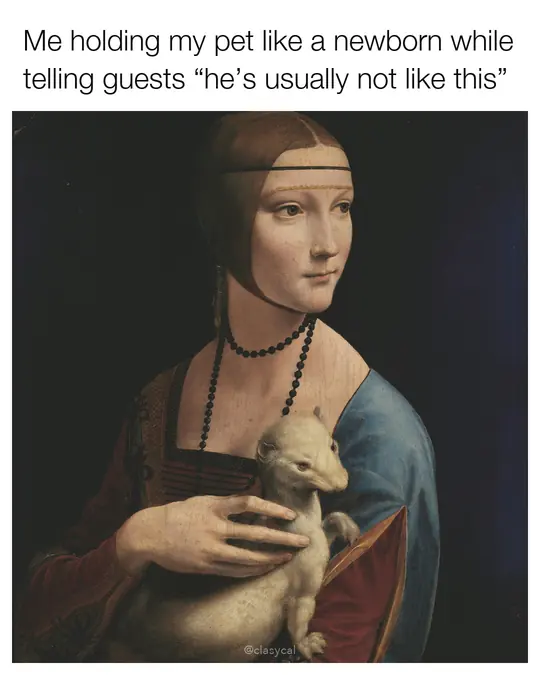
- A readable emotion. Shock, smugness, dread, boredom, joy. If you can name the feeling in one word, it can carry a caption.
- A face or gesture that works small. Most memes are seen on a phone, often as a thumbnail. Big, clear expressions survive. Subtle backgrounds don't.
- The contrast. Centuries-old gravitas plus a very modern problem. The more serious the painting looks, the funnier the caption gets.
- Free to use. All of these works are in the public domain, so anyone can remix them. That part matters more than it sounds: free images are what let a meme spread.
Want to try it yourself? Our guide on how to make your own classical art meme covers where to find free paintings and how to write a caption that lands. Or see the formula in action in the Clasycal meme archive.
Five centuries of content, still trending. Follow @clasycal on Instagram for a fresh old masterpiece in your feed.
Sources
- Know Your Meme: Classical Art Memes
- Mona Lisa, Wikipedia (1911 theft, L.H.O.O.Q.)
- The Scream, Wikipedia (versions, 2012 sale)
- The Creation of Adam, Wikipedia
- Girl with a Pearl Earring, Wikipedia
- The Swing (Fragonard), Wikipedia
- Saturn Devouring His Son, Wikipedia
- Know Your Meme: Joseph Ducreux / Archaic Rap