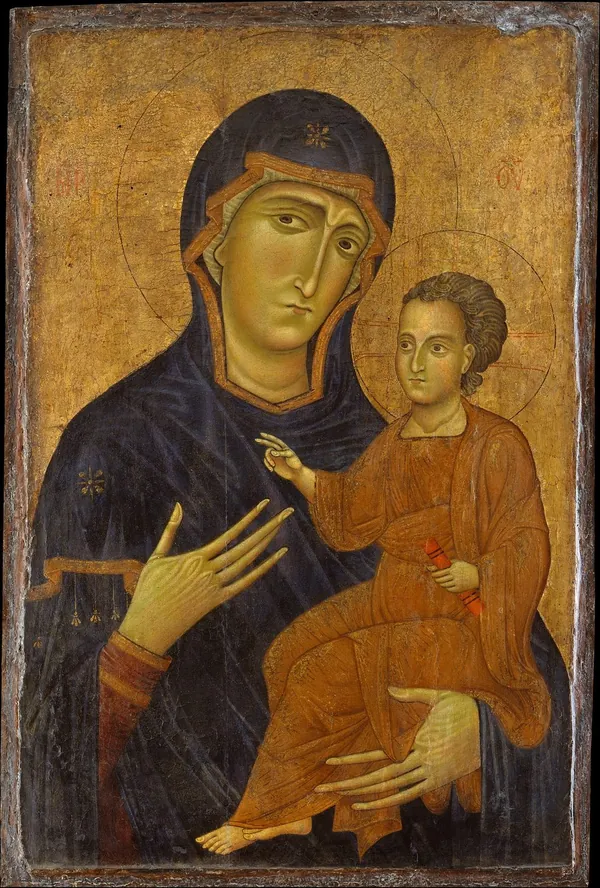
You've seen him. Gold background, serious mother, and on her lap a baby with the face of a 46-year-old tax adviser. He has a receding hairline. He is giving a blessing. He looks like he's about to ask to speak to the manager.
Medieval babies are one of the internet's favorite art history mysteries. Were medieval painters bad at babies? Were medieval babies just like that? Neither. The real answer is much more interesting, and it mostly comes down to one specific baby.
It's (almost) always the same baby
Most surviving medieval paintings of infants show the same child: Jesus. Paintings of children were overwhelmingly religious, and as Vox's Phil Edwards put it in his widely shared explainer, they "were usually commissioned by churches," which limited the subjects to Jesus and a handful of other biblical babies.
That matters, because nobody wanted to paint Jesus as a normal baby. He wasn't supposed to be a normal baby.
The idea of the "little man"
Art historian Matthew Averett of Creighton University, interviewed for that explainer, points to the idea of the homunculus, literally "little man." In this way of thinking, Christ was born "perfectly formed and unchanged": not a helpless newborn who would grow into wisdom, but the full, all-knowing Son of God in a small body.
So painters gave him an adult's proportions, an adult's face and an adult's body language. Look at the baby in Berlinghiero's Madonna and Child from the 1230s, at the top of this page. He sits upright like a tiny bishop, raises his hand in blessing and holds a scroll. He is not reaching for a snack. He is delivering a sermon.
Once that adult-looking Christ child became the model, it became the model for babies in art in general. If the most important baby in the world looked like a small senator, why would any other painted baby look different?
It wasn't a lack of skill
It's tempting to assume medieval painters simply couldn't draw a chubby infant. But these were artists who could lay gold leaf, grind precious pigments and build complex compositions. Averett describes the strangeness as a "lack of interest in naturalism": they "veered more toward expressionistic conventions."
Put simply, realism wasn't the goal. Much of this art follows the conventions of Byzantine icons, where figures are meant to be recognizable and meaningful rather than lifelike. Mary is large because she is important. Christ is mature because he is divine. The gold background stands for heaven.
Judged by that standard, the old-man baby isn't a failure. It's on-brand.
Then the Renaissance discovered cute
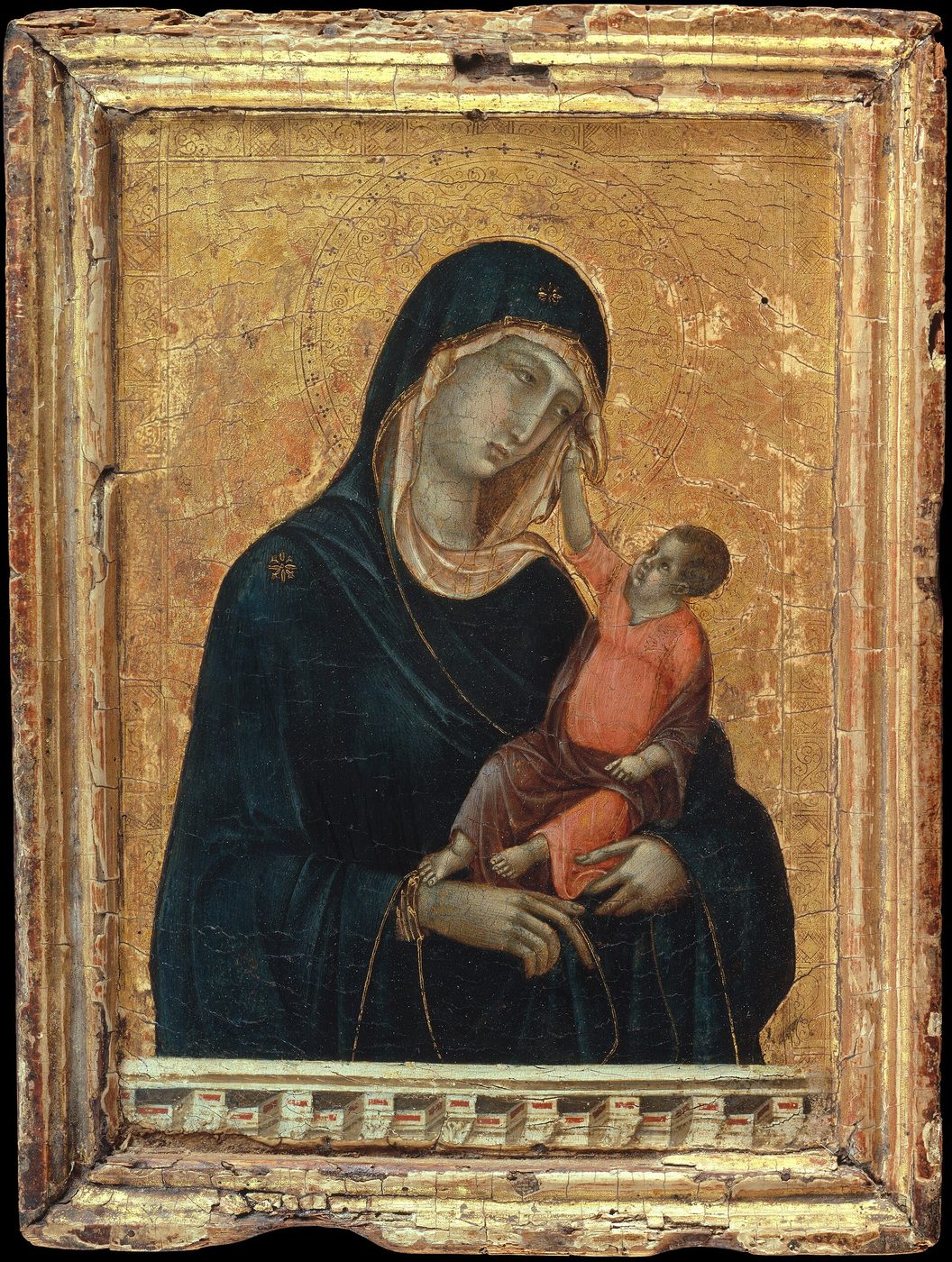
Around 1300 you can already see the ice starting to melt. In Duccio's Madonna and Child, the baby still has an oddly grown-up face, but he reaches up and plays with his mother's veil, like a real child. It's a small gesture with big consequences.
Over the 1400s and 1500s, two things changed.
- Artists got interested in nature. Renaissance painters studied anatomy, perspective and the human body closely. Real babies, with their big heads, short limbs and dimpled knees, became something worth observing.
- The customers changed. Wealthy merchant families and other patrons outside the church started commissioning art, including portraits of their own children. As the explainer puts it, they wanted their kids to look cute and to reflect well on the family. No parent wants a portrait of their son looking like he's about to foreclose on your farm.
Painters also had a fresh set of reference babies: the chubby winged children of ancient Roman art, which Renaissance artists revived as putti and cherubs.
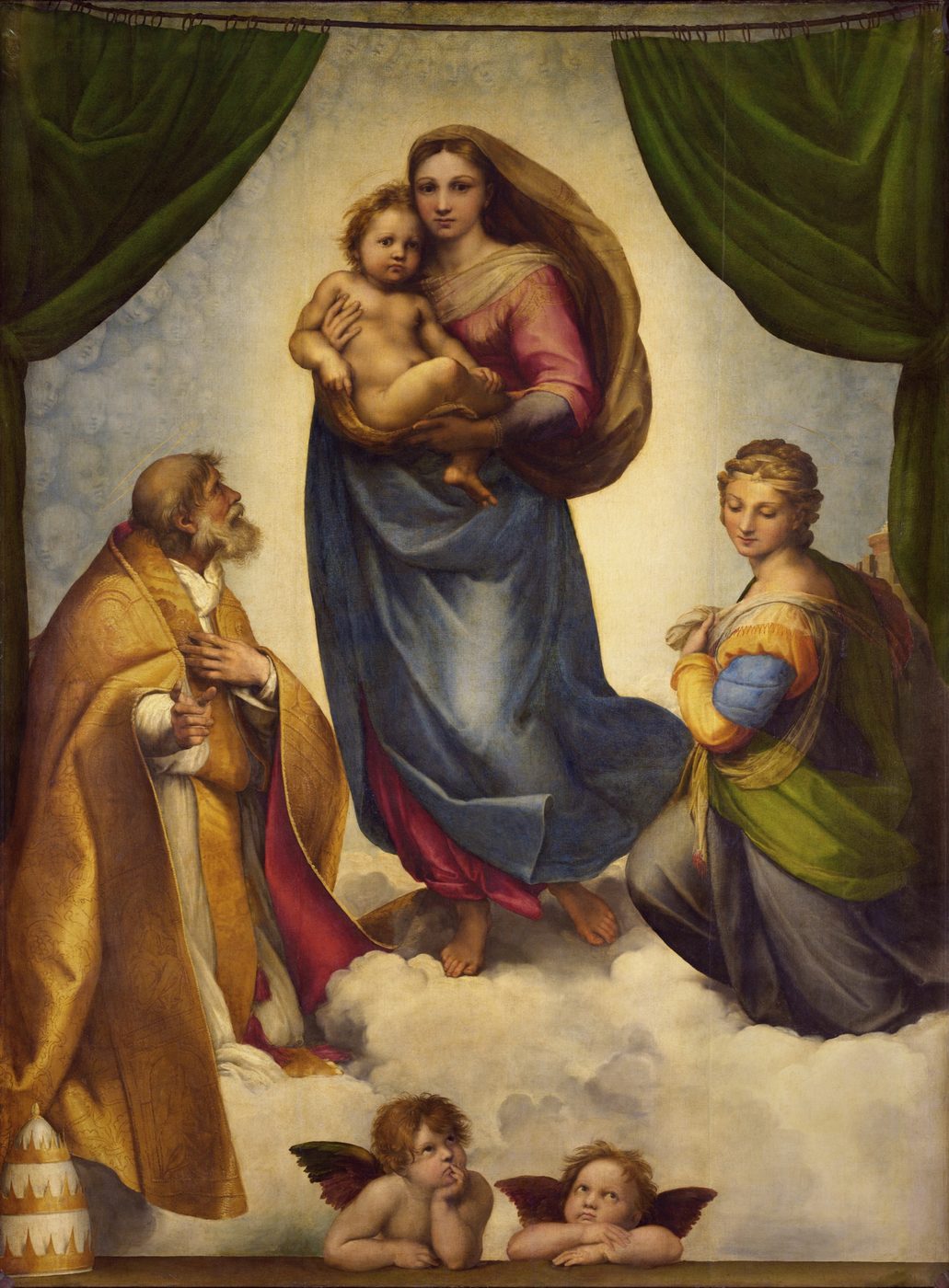
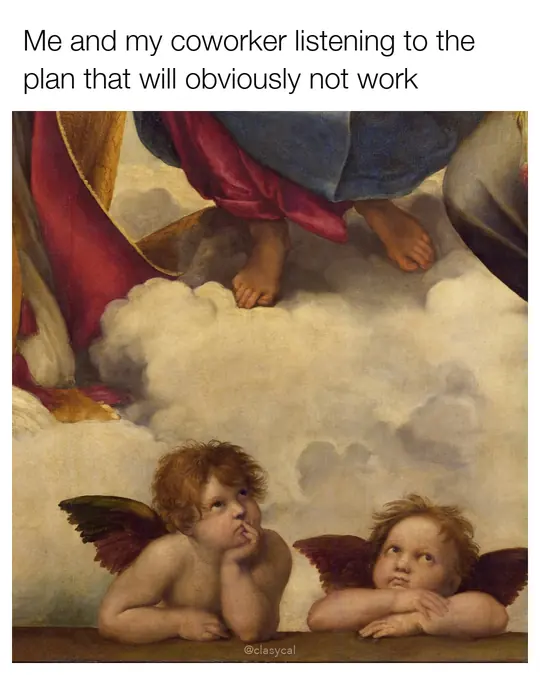
By 1512, Raphael's Sistine Madonna shows a baby Jesus who looks like an actual baby: round, soft and slightly suspicious of strangers. And at the bottom of the same painting sit the two little angels leaning on their elbows, looking spectacularly bored. They've since become one of the most reproduced details in art history, on everything from postcards to mugs.
How to spot a "little man" baby in the wild
Next time you're in a museum (or deep in a late-night scroll), here's the field guide:
- Adult proportions. A real newborn's head is roughly a quarter of its body length. The medieval Christ child often has the small head and long torso of a grown man, just shrunk.
- The blessing hand. Two raised fingers, like a priest at the altar. No real infant has ever done this on purpose.
- Props of authority. A scroll, a book or an orb. Not a rattle.
- Posture. Sitting bolt upright, facing you, fully dressed in robes. Babies flop. This one presides.
So, quick recap
- Most medieval babies in art are the baby Jesus, painted for churches.
- Theology said he was born fully formed, so artists painted a small man, not a newborn.
- Medieval art aimed for meaning, not realism, following icon conventions.
- Renaissance naturalism and new private patrons brought in the cute baby.
Why they're perfect meme material
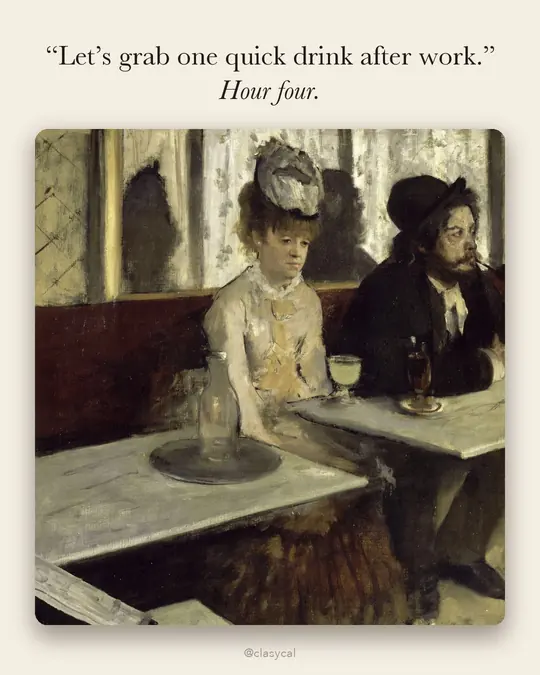
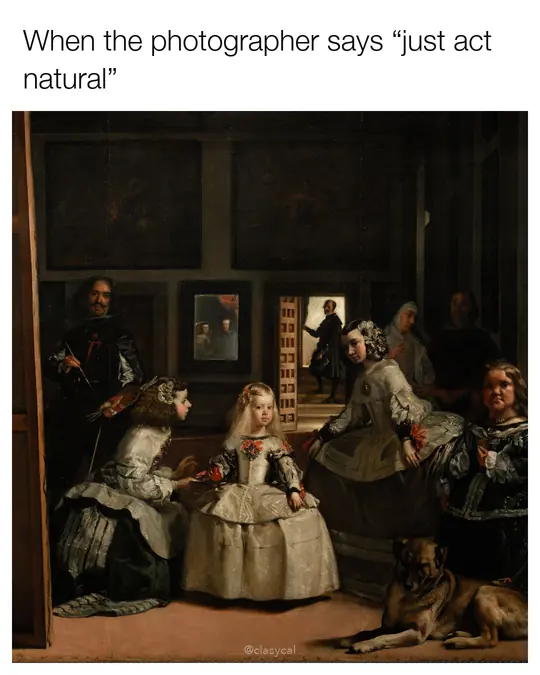
The medieval baby is a gift to the internet for the same reason it unsettles us: it's an adult expression in a tiny body. That's the feeling of being 27 and opening a letter from the tax office. It's the toddler who stares at you like he knows what you did. Every one of these paintings is an early draft of "me, internally, at the family gathering."
If you want more faces that say more than they should, see why nobody smiles in old paintings, or browse our meme archive. And if you'd rather give a medieval baby some color yourself, our free coloring pages are waiting.
Born fully formed, ready to judge. Follow @clasycal on Instagram for more old souls with strong opinions.
Sources
- Vox: Why babies in medieval paintings look like ugly old men (Phil Edwards, with Matthew Averett), via Rosetta
- Mental Floss: Why do babies in medieval paintings look so old and scary?
- Open Culture: Why babies in medieval paintings look like middle-aged men
- The Met: Madonna and Child, Berlinghiero
- Sistine Madonna, Wikipedia